
Sustainability Report
Reynders label printing
2024
Consolidated Sustainability Report
according to VSME standard
Voluntary SME Sustainability Reporting Standard
Basic Module
B1: Basis for Preparation4Company Profile4Board Composition5Business Model & Strategy6Stakeholder Engagement7Double Materiality8B2: Practices, Policies and Future Initiatives9Environmental
B3: Energy and Greenhouse Gas Emissions10Energy Consumption and Mix10Greenhouse Gas Emissions11C3: GHG Reduction Targets12C4: Climate Risks12B4: Pollution of Air, Water and Soil13Substances of Concern13B7: Resource Use and Waste Management14Material Resource Inflows14Waste Management15Foreword
Our Mission and Vision
At Reynders, our vision has always extended beyond mere expansion. Label printing is the backbone of numerous industries—when businesses grow, so do we, and when challenges arise, we stand together with our partners to find solutions. The demand for modern, environmentally responsible label solutions continues to rise, and we are proud to meet this demand with cutting-edge, sustainable solutions that set new standards in our industry.
Our commitment to high-quality products, integrating technology, and maintaining the highest sustainability certifications underscores our dedication to progress that benefits both businesses and communities. We take great pride in enabling companies to expand, innovate, and create jobs, knowing that our products support industries that drive economic growth.
Social Responsibility
Despite the challenges of our time, we continue to move forward with confidence, proving that long-term vision and responsible investment are key to success. None of this would be possible without the dedication of our team, the trust of our investors, and the strong partnerships we have built over the years.
- •Modern Label Production: We are creating a European portfolio of modern, environmentally friendly label production facilities with high-quality printing technologies
- •Sustainability: We appreciate our investors' assets and contribute to the sustainable future of the label industry in Europe
- •Communities: We are a responsible member of society, especially in the communities where we operate
- •Employees: We provide an inspiring environment for our employees and support their development
We draw on tradition and redefine it, enabling us to create new business opportunities and make these regions a better place to live.
Key Figures for 2024:
- Total Revenue: 171 506 718 EUR
- Total Asset Value: 120,332,329 EUR
- Number of Employees: 692
- Scope: Belgium, France, Poland, Germany, Spain, India
This report presents a comprehensive view of our activities in the areas of environmental responsibility, social responsibility, and corporate governance (ESG). We transparently present our results, challenges, and plans for the future.
Basic company information
Legal Entity
Legal name: NV Reynders label printing
Headquarters: Nijverheidsstraat 3, 2530 Boechout, Belgium
Legal form: NV (Public Limited Company)
Year of incorporation: 1956
Ownership & Leadership
Ownership: 100% Family-owned
Primary sector: Printing & Packaging
Stock exchange listing: Not listed
Mission
To deliver high-quality, compliant, and sustainable labeling solutions to regulated industries worldwide, combining technical excellence with environmental responsibility.
Vision
To be the trusted European leader in sustainable labeling, recognized for innovation, quality, and ethical business practices.
Values
Quality, Integrity, Sustainability, Customer Partnership, Continuous Improvement, Employee Well-being
Our Services
Self-adhesive labels
High-quality pressure-sensitive labels for pharmaceutical, cosmetic, and food applications
Booklet & Multilayer
Complex multi-page constructions for regulatory compliance and extended content
Shrink sleeves
360° coverage solutions for beverages, cosmetics, and household products
Flexible packaging
Sustainable pouches and films for food and personal care
Specialty labels
Security features, foil applications, and verso printing for premium applications
Prepress services
Design support, color matching, and technical optimization
Industries Served
Our Global Presence
Reynders label printing consists of nine independent companies operating under the ownership and strategic direction of the Reynders family. Each entity functions autonomously while sharing a common vision of technical excellence, customer focus, and sustainable growth. This decentralized yet fully owned structure allows each branch to specialize and respond flexibly to market needs, while maintaining consistent quality, innovation standards, and corporate values across the group.

Reynders Etiketten
Belgium
Limited liability company (BV)

Reynders Etiketten Deutschland
Germany
Gesellschaft mit beschrankter Haftung (GmbH)

Reynders Etiketten Polska
Poland
Spolka z ograniczona odpowiedzialnoscia (Sp. z o.o.)
Reynders Etiquettes Cosmetiques
Belgium
Limited liability company (BV)

Reynders Etiquettes France
France
Societe par Actions Simplifiee Unipersonnelle (SASU)
Reynders Pharmaceutical Labels
Belgium
Limited liability company (BV)

Reynders Spain
Spain
Sociedad Anonima (SA)

Reynders label printing India
India
Private Limited (Pvt. Ltd.) company
Reynesco Invest
Belgium
Financial and investment entity
Our production sites
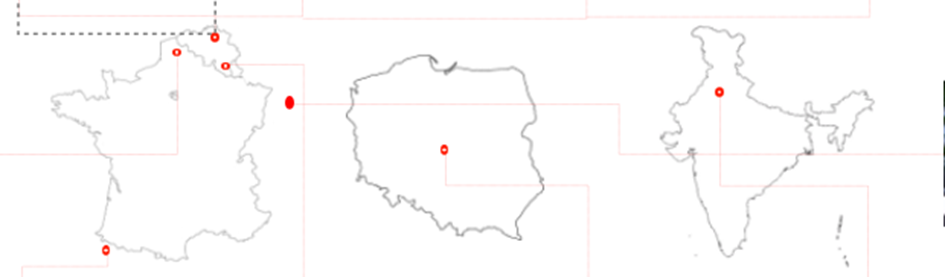
Total Employees
692
Countries of operation
6
Production Facilities
8
Production Locations:
General basis for preparation of sustainability statements
Basis for preparation
Consolidated
Reporting period: 1 January 2024 - 31 December 2024
Reporting scope
Same as financial statements - covers all consolidated entities
Value chain coverage and reporting approach
Reynders label printing takes into account all parts of its value chain in this Sustainability Report. This integrated approach enables the company to identify and assess environmental and social impacts that may arise in both the upstream (preceding) and downstream (subsequent) stages of the value chain, including relationships with key suppliers and customers.
The Management of Reynders label printing declares that this Sustainability Report has been prepared in good faith, based on the best available data. The report reflects the company's status and practices in the areas of environmental, social, and governance (ESG) matters as of 31 December 2024 and represents the first year of reporting under the new regulatory requirements.
The company has not used the option to omit specific information corresponding to intellectual property, know-how, or the results of applied innovations, nor has it omitted disclosures related to impending developments or matters in the course of negotiation.
Management and supervisory bodies
Board composition
Executive members
2
Non-executive members
3
Independent members
3 (60%)
Gender balance
5 men / 0 women
Organizational structure
Strategy, business model, and value chain
Products, markets, and strategy
Reynders label printing offers a broad portfolio of high-quality labeling and packaging solutions, including self-adhesive labels, booklet/multilayer constructions, shrink sleeves, flexible packaging, and specialty labels (e.g. foil, verso, security). Product development remains focused on customization, technical performance, and regulatory compliance in sectors such as pharmaceuticals, cosmetics, food & beverage, automotive and chemicals.
The company serves global B2B clients operating in highly regulated and brand-sensitive sectors. Key industries include pharmaceuticals (including hospitals, laboratories, and parapharmaceutical products), cosmetics and personal care, food and beverages, chemicals (including agrochemicals and petrochemicals), and automotive (including tires and batteries). Together, these sectors represent approximately 85% of the Group's total sales during the reporting period, with the remaining 15% generated from other industries such as household goods, services, transport, and logistics.
Key geographic markets include Western and Central Europe and Asia, with the Indian branch serving exclusively the local market. The company's customer base consists primarily of multinational manufacturers and contract packagers that rely on Reynders' expertise in high-quality, compliant, and sustainable labeling solutions. No significant customer groups were added or discontinued during the reporting period.
Product Portfolio Distribution & Year-over-Year Growth (2023-2024)
Product Group Share
Growth Evolution 2023-2024
Business model: inputs and outputs
The company's business model is built on high-quality inputs including raw materials such as virgin paper and film, adhesives, inks, varnishes, and foils - procured primarily from European suppliers to ensure short lead times and regulatory compliance (e.g. GMP, BRC). Procurement is managed centrally through long-term partnerships and internal ERP systems. The company also relies on advanced machinery suppliers, energy providers, and skilled labor. In-house IT and R&D capabilities ensure operational independence and continuous innovation.
Reynders label printing delivers tailor-made, technically advanced labeling solutions that support customer needs in traceability, safety, branding, and regulatory compliance. The company's strong customer retention, expansion into new markets, and consistent investment in sustainability (e.g. liner recycling, low-energy printing, FSC materials) provide long-term value for stakeholders. The business model ensures resilient and high-margin production backed by a strong quality and certification system.
Value chain structure
Raw Materials & Inputs
Global suppliers of paper, film, foils, inks, adhesives, packaging materials
Machinery & Technology Providers
Manufacturers of printing presses, converting and control equipment
Energy & Utilities
Suppliers of electricity, gas and water
Reynders label printing
- •Develop, test and produce high-end labeling and flexible packaging solutions
- •Operate eight production sites with in-house prepress, press, and postpress processes
- •Manage quality, safety and environmental performance (ISO-certified)
- •Drive innovation in sustainable materials and digitalization (Triple R, EDI, liner recycling)
- •Serve regulated industries with tailor-made GMP-compliant labeling
Distributors & B2B Clients
External brokerage partners
Waste Management & Recycling Partners
Specialized companies for backing paper and packaging recycling
Regulators
Oversight and compliance requirements
Local Communities
Social and environmental engagement
Interests and views of stakeholders
Stakeholder identification and engagement
Reynders label printing maintains structured and transparent stakeholder engagement processes across all sites in Europe and India. Stakeholders are identified based on two main criteria: groups that directly influence the company's activities through their legislative, regulatory, or operational roles, and groups that are directly or indirectly affected by the company's operations.
Engagement occurs through formal consultations with authorities, suppliers, and key customers; internal communication structures (daily briefings, fortnightly QA meetings, monthly production meetings); customer liaison through dedicated sales and customer service; community outreach for major works; and digital communication via website and LinkedIn. This engagement is coordinated within the integrated management system where relevant (ISO 9001, 14001, 45001), with the Prevention Advisor centrally overseeing communications related to safety, well-being, and environmental topics.
| Stakeholder Group | Method of Communication | Purpose | Type |
|---|---|---|---|
| Customers (B2B) | Regular meetings, audits, certifications (ISO 9001, BRCGS/IoP, GMP), customer feedback channels, technical documentation | Ensure product safety, compliance, continuous improvement; maintain trust and transparency | Affected |
| Suppliers and Partners | Supplier Code of Conduct (ETI Base Code), REACH compliance, audits, long-term partnerships, EDI communication | Ensure ethical sourcing, fair labour practices, environmental compliance, stable supply chain | Affected |
| Employees | Internal communication, training, ISO 45001 and ISO 14001 systems (where relevant), annual reviews, employee surveys | Ensure safe and fair working conditions, professional development, engagement in sustainability | Affected |
| Regulatory Authorities | Audits, compliance documentation, environmental and safety inspections, REACH, ISO and GMP certifications | Maintain full legal compliance and certification validity; demonstrate conformity with EU and national laws | User |
| Local Communities | Employment initiatives with social enterprises (supporting integration of people with disabilities, refugees), local sourcing | Contribute to local economic development and social inclusion through responsible business practices | Affected |
| Industry Associations | Participation in AIM's Digital Watermarks Initiative HolyGrail 2.0, ETI Base Code membership, sustainability projects | Contribute to circular economy innovation and promote sectoral collaboration in sustainability | User |
| End-Users (Consumers) | Compliance with packaging and labelling regulations, clear product information, safe inks and adhesives, ISO 9001 quality control | Ensure consumer health and safety and enhance transparency in labelling | Affected |
Material impacts, risks and opportunities
Overview of Material Topics
| Code | Topic | Impact | Financial Opportunity | Financial Risk | Final Result |
|---|---|---|---|---|---|
| E1 | Climate change | ||||
| E2 | Pollution | ||||
| E3 | Water and marine sources | ||||
| E4 | Biodiversity and ecosystems | ||||
| E5 | Resource Use & Circular Economy | ||||
| S1 | Own Workforce | ||||
| S2 | Workers in the Value Chain | ||||
| S3 | Affected Communities | ||||
| S4 | Consumers and end-users | ||||
| G1 | Business Conduct |
Material Topics and Related Impacts, Risks and Opportunities
| Code | Topic / Subtopic | IRO Type | Supply Chain Position | Description of Impact | Time Horizon |
|---|---|---|---|---|---|
| E1 | GHG emissions (Scope 1, 2 & 3) | Impact - Actual; Negative | Upstream, Own operation, Downstream | Greenhouse gas emissions arise from fossil fuel use, electricity consumption, and upstream/downstream logistics such as raw materials, transport, and waste. | Short-term |
| E1 | Energy consumption from gas and electricity | Impact - Actual; Negative | Own operation | High energy use in drying and printing processes contributes to indirect emissions. Some sites still rely on fossil-based heating systems. | Short-term |
| E1 | Renewable energy installations (solar panels) | Impact - Actual; Positive | Own operation | Solar panels in Spain and Poland reduce grid dependency, operational costs, and CO₂ emissions; further installations are planned. | Short-term |
| E2 | SVHC content in products | Impact - Actual; Negative | Upstream, Own operation, Downstream | Potential presence of substances of very high concern (DEHP, BPA, etc.) poses environmental and health risks. Strict REACH compliance and customer notification mitigate risks. | Short-term |
| E5 | Material selection | Impact - Actual; Positive | Upstream, Own operation | The company promotes material efficiency and circularity via its "Triple R" (Reduce–Reuse–Recycle) program, material lightweighting, and supplier collaboration. | Short-term |
| E5 | Resource inflows | Impact - Actual; Negative | Upstream, Own operation | High consumption of virgin materials (paper, plastics, inks) increases environmental footprint. FSC certification and ISO 14001 reduce impact. | Short-term |
| E5 | Product design | Impact - Actual; Positive | Own operation, Downstream | Development of recyclable, compostable, and FSC-certified materials supports circularity and reduces end-of-life impacts. | Short-term |
| E5 | Waste in own operation | Impact - Actual; Negative | Own operation | Production waste (including liner waste) contributes to Scope 3 emissions; re-use and regranulation options are explored. | Short-term |
| S1 | Working conditions | Impact - Actual; Positive | Own operation | Permanent contracts, fair pay, and ISO 45001-certified safety systems (where relevant) ensure strong labour standards and safe workplaces. | Short-term |
| S1 | Equal treatment and opportunities for all | Impact - Actual; Positive | Own operation | Inclusive workforce (20+ nationalities), and strong anti-discrimination measures strengthen diversity and equality. | Short-term |
| S1 | Other work-related rights | Impact - Actual; Positive | Own operation | Code of Conduct prohibits discrimination, harassment, and inequality; data protection ensured by role-restricted systems. | Short-term |
| S2 | Working conditions in the supply chain | Impact - Actual; Positive | Upstream | Supplier codes aligned with the ETI Base Code prohibit child labour and corruption; human-rights oversight partially implemented. | Short-term |
| S4 | Information-related impacts for consumers and end-users | Impact - Actual; Positive | Downstream | Certified labelling processes (ISO 9001, BRCGS, GMP) ensure accuracy and traceability, reducing mislabelling risks. | Short-term |
| S4 | Personal safety of consumers and end-users | Impact - Actual; Positive | Downstream | Strict chemical approval and 100% camera inspection ensure consumer health protection; no product recalls reported. | Short-term |
| G1 | Corporate culture | Impact - Actual; Positive | Own operation | The Code of Conduct sets ethical and behavioural standards; company culture reinforces compliance and accountability. | Short-term |
| G1 | Protection of whistle-blowers | Impact - Actual; Positive | Own operation | EU Whistleblower Directive implemented; secure and confidential channels promote transparency and trust. | Short-term |
| G1 | Management of supplier relationships | Impact - Actual; Positive | Own operation | Strong partnerships supported by REACH compliance, fair payment practices, and adherence to the ETI Base Code. | Short-term |
| G1 | Corruption and bribery | Impact - Actual; Positive | Own operation | Zero-tolerance anti-corruption policy embedded in Code of Conduct and ETI Base Code, supported by employee training. | Short-term |
Policy Framework Overview
Reynders label printing manages sustainability through an integrated approach combining certified management systems, a comprehensive Code of Conduct, and adherence to international standards. While some standalone policies are still being formalised, the company's practices effectively address environmental protection, social responsibility, and ethical business conduct across all operations.
Environmental
ISO 14001 certified, GHG Protocol compliant, FSC certification, Triple R Program
Social
ETI Base Code, Code of Conduct, ISO 45001 health and safety, collective bargaining
Governance
Code of Conduct, whistleblower protection, anti-corruption measures, supplier guidelines
Environmental Policies and Practices
Climate Change Management
Reynders label printing has not yet adopted a stand-alone Climate Change Policy. However, the company manages climate-related issues effectively through existing management systems, verified methodologies, and group-wide environmental commitments.
Greenhouse gas emissions are monitored and reported in accordance with the GHG Protocol, covering Scope 1, 2 and 3 emissions across all sites. Several production facilities are additionally certified under ISO 14001 Environmental Management System, while all operate under a group-wide ISO 9001 Quality Management System that embeds procedures for energy efficiency, process optimisation and continuous improvement.
Framework Alignment:
- ✓GHG Protocol Corporate Standard
- ✓CDP Climate Disclosure
- ✓Paris Agreement 1.5°C alignment
- ✓ISO 14001 Environmental Management
Social Policies and Practices
Code of Conduct
Reynders label printing has implemented internal rules through its Code of Conduct, which applies to all employees across its sites. The Code covers:
- •Respect for human rights and dignity
- •Equal treatment, diversity, and zero tolerance of discrimination or harassment
- •Safe and healthy working conditions
- •Fair remuneration and compliance with labour laws
- •Freedom of opinion and open communication
- •Compliance with applicable laws and internal company rules
ETI Base Code Alignment
Reynders label printing's Code of Conduct and ethical standards are aligned with the ETI Base Code (Ethical Trading Initiative), to which the company formally subscribes. The ETI Base Code is founded on the conventions of the International Labour Organization (ILO) and is consistent with the UN Guiding Principles on Business and Human Rights and the Universal Declaration of Human Rights.
By endorsing the ETI Base Code, Reynders label printing commits to:
- •Employment that is freely chosen, without forced or bonded labour
- •Respect for freedom of association and the right to collective bargaining
- •Safe and hygienic working conditions and the prohibition of child labour
- •Equal opportunities and non-discrimination in all employment practices
- •Fair wages, reasonable working hours, and humane treatment
Policy Confirmations
Governance Policies and Practices
Business Conduct Policy
The Code of Conduct includes commitments to:
- •Conducting all business operations with honesty, transparency, and fairness
- •Prohibiting bribery, corruption, and conflicts of interest
- •Ensuring equal opportunity, non-discrimination, and respectful workplace behaviour
- •Upholding data confidentiality, intellectual property rights, and responsible communication
- •Promoting safety, quality, and environmental stewardship as part of daily business ethics
Whistleblowing and Investigation Mechanisms
The Code of Conduct contains a "speaking-up" section referencing the EU Whistleblower Directive. Employees can report unethical or unlawful behaviour through internal channels, ensuring non-retaliation and confidentiality.
Internal Reporting Channels
Reports can be submitted in writing or verbally through official channels:
- • By telephone: +32 (0)3 460 14 27
- • By email: [email protected]
- • By post: Reynders label printing, attn. An Meeussen, Nijverheidsstraat 3, 2530 Boechout, Belgium
Protection Measures
- • Prohibition of retaliation (dismissal, demotion, harassment, discrimination)
- • Confidential handling of all reports and secure storage of related information
- • Acknowledgement of receipt within seven days and feedback within three months
- • Anonymous reporting options and impartial follow-up
Future Initiatives and Planned Developments
Environmental Initiatives
- ✓Expansion of solar panel capacity at additional European sites by 2026
- ✓30% reduction in Scope 1+2 emissions by 2030 (vs 2018 baseline)
- ✓Continued fleet electrification programme
- ✓Enhanced supplier collaboration for Scope 3 reduction
Social Initiatives
- ✓Continued investment in employee training and development programmes
- ✓Enhancement of health and safety management systems
- ✓Strengthening of diversity and inclusion initiatives
- ✓Expansion of community engagement programmes
Our Environmental Impact
We are committed to reducing our environmental footprint through sustainable practices, energy efficiency, and responsible resource management across all our operations.
C3: GHG Reduction Targets and Climate Transition
Decarbonisation Plan
Reynders label printing has established a structured decarbonisation plan that targets emission reductions across Scopes 1, 2 and 3, aligned with its CDP-disclosed climate commitments and verified under the GHG Protocol Corporate Standard. The plan focuses on lowering direct energy-related emissions, improving energy efficiency, and expanding renewable energy capacity.
GHG Emission Reduction Targets
Reynders label printing has set comprehensive targets to reduce greenhouse gas emissions across all scopes. The following table presents our base year values, progress in 2023 and 2024, and the pathway toward our 2025-2030 reduction commitments.
| Target | Base Year | Base Value | 2023 Value | 2023 Progress | 2024 Value | 2024 Progress |
|---|---|---|---|---|---|---|
| Scope 3 CO₂e/m²; 25% decrease in 2027 vs 2022 | 2022 | 0.000183477 | 0.000139131 | -24.17% | 0.00003402 | -81.46% |
| Scope 1+2 (location based) CO₂e/m²; 15% decrease in 2025 vs 2018 | 2018 | 0.000120089 | 0.000081549 | -32.09% | 0.00011612 | -3.30% |
| Scope 1+2 (location based)+3 CO₂e/m²; 15% decrease in 2025 vs 2013 | 2013 | 0.000365511 | 0.000220680 | 39.62% | 0.000150141 | -58.92% |
| Scope 3 CO₂e; 0.5% decrease in 2025 vs 2018 | 2018 | 10,444.02 | 7,955.75 | -23.82% | 1,913.52 | -81.68% |
| Scope 1+2 (location based); 30% decrease in 2030 vs 2018 | 2018 | 5,121.14 | 4,663.11 | -8.94% | 6,531.39 | 27.54% |
| Scope 1+2 Reynders Etiketten CO₂e/m²; 20% decrease in 2028 vs 2023 | 2023 | 0.00008812 | - | - | 0.00010754 | 22.04% |
| Scope 1+2 Reynders Pharmaceutical Labels CO₂e/m²; 20% decrease in 2028 vs 2023 | 2023 | 0.00010929 | - | - | 0.00014184 | 29.78% |
| Scope 1+2 Reynders Germany CO₂e/m²; 20% decrease in 2028 vs 2023 | 2023 | 0.00012296 | - | - | 0.00028723 | 133.60% |
Solar Energy Progress
2023 Solar Electricity Share
1,43%
2024 Solar Electricity Share
3,76%
Key Measures and Actions
Energy Efficiency and Building Improvements
- ✓Ongoing LEDification across all sites, including replacement of remaining fluorescent and halogen lighting.
- ✓Installation of heat exchangers, roof insulation, and low-energy UV curing systems to reduce thermal losses and power demand.
- ✓Motion detectors installed in several offices and production rooms to control lighting and limit unnecessary energy use.
- ✓Gradual replacement of fossil-fuel-based heating systems with high-efficiency alternatives.
Renewable Energy
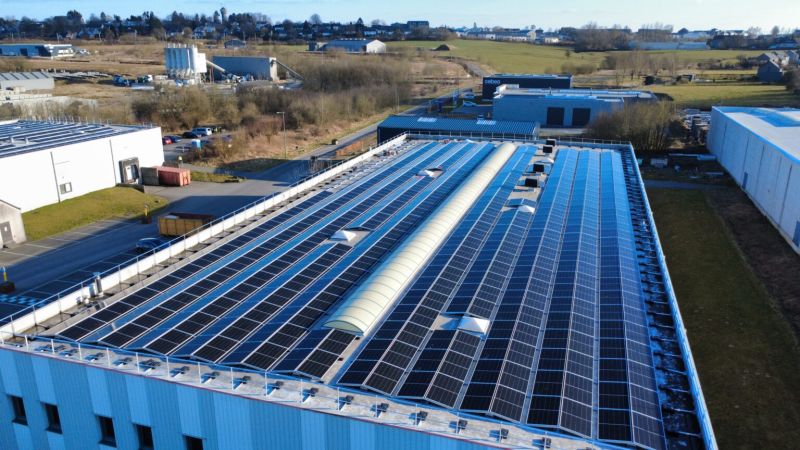
- ✓Deployment of photovoltaic solar panels at sites in Spain and Poland, contributing 3.76% of total electricity consumption in 2024 (up from 1.43% in 2023).
- ✓Evaluation of additional solar capacity across other European sites by 2026.
Fleet Electrification
- ✓Full electrification of the company's car fleet, eliminating direct fuel combustion emissions and significantly reducing Scope 1 emissions.
Water Efficiency
- ✓Installation of rainwater collection systems at new and expanded building sections.
- ✓Awareness-raising campaigns across the Group to promote responsible water usage and reduction of consumption in production and sanitary areas.
Scope 3 Management
- ✓Collaboration with suppliers to reduce the carbon footprint of raw materials, particularly paper, films, and inks.
- ✓Implementation of the Triple R Program (Reduce – Reuse – Recycle) to minimise material intensity and waste.
Monitoring and Verification
- ✓Emission data tracked per m² of production and verified under ISO 14001.
- ✓Continuous improvement monitored through CDP reporting and ISO 14001 management reviews at certified sites.
Through on-site renewable generation, energy and water efficiency upgrades, full fleet electrification, and supplier collaboration, Reynders label printing expects to achieve or exceed all near-term reduction targets by 2027, maintaining continuous improvement toward its 2030 decarbonisation goal.
Paris Agreement Alignment
Reynders label printing's greenhouse gas (GHG) reduction targets are aligned with the 1.5°C global warming limit of the Paris Agreement, as they reflect the decarbonisation trajectory compatible with science-based targets for the printing and packaging sector.
Integration with Business Strategy
Reynders label printing integrates its climate action plan directly into its corporate and financial strategy. Investments in solar panels, LED curing, and energy-efficiency technologies are part of the annual CAPEX plan, supporting both cost reduction and emission goals. Progress on CO₂ reduction and renewable energy use is reviewed annually by management and the Board.
Unavoidable Emissions Management
Despite ongoing progress, Reynders label printing recognises that certain process-related and energy-intensive emissions remain unavoidable due to the thermal drying and curing stages inherent to label printing and material processing. Such residual emissions could slow down progress toward absolute zero in the short term, especially at sites still partly dependent on natural gas for heat generation and where production scale limits the feasibility of full electrification.
Energy Consumption and Mix
| Energy Category | Value (MWh) | Share (%) |
|---|---|---|
| Fuel consumption from coal and coal products | - | - |
| Fuel consumption from crude oil and petroleum products | 99 | 0.53% |
| Fuel consumption from natural gas | 2 688 | 15% |
| Fuel consumption from other fossil sources | - | - |
| Purchased electricity, heat, steam, and cooling from fossil sources | 6 511 | 35% |
| Total fossil energy consumption | 9 298 | 50% |
| Consumption from nuclear sources | 2 938 | 16% |
| Fuel consumption for renewable sources (biomass) | - | - |
| Purchased electricity, heat, steam, cooling from renewable sources | 6 346 | 34% |
| Self-generated non-fuel renewable energy | - | - |
| Total renewable energy consumption | 6 346 | 34% |
| TOTAL ENERGY CONSUMPTION | 18 582 | 100% |
Renewable Energy Production
Self-generated renewable energy from solar panels
Greenhouse Gas Emissions (Scope 1, 2 and 3)

Scope 3 GHG Emissions Breakdown
| Category | Emissions (tCO₂eq) |
|---|---|
| 1. Purchased goods and services | 35 563 |
| 2. Capital goods | 1 739 |
| 3. Fuel and energy-related activities (not in Scope 1 or 2) | 2 241 |
| 4. Upstream transportation and distribution | 1 337 |
| 5. Waste generated in operations | 1 343 |
| 6. Business traveling | Included in cat. 1 |
| 7. Employee commuting | 549 |
| 8. Upstream leased assets | 76 |
| 9. Downstream transportation | 989 |
| 10-15. Other categories | Not applicable |
Methodologies and Emission Factors
Reynders label printing follows the GHG Protocol Corporate Standard for the calculation and measurement of greenhouse gas (GHG) emissions across Scopes 1, 2, and 3.
- Activity-based method: Uses specific operational data such as electricity consumption (kWh), fuel use (litres), or gas volume (GJ, m³)
- Spend-based method: Relies on financial data (EUR or USD) where activity data are unavailable
GHG Emissions Intensity (location-based)
GHG Emissions Intensity (market-based)
Significant Changes
There have been no significant changes in the structure of the business and in the value chain during the reporting period.
Primary Data Usage
Percentage of GHG Scope 3 calculated using primary data from suppliers or other partners in the value chain: 0.00%
Scope 3 Category Methodology
Categories Included (1, 2, 3, 4, 5, 7, 8, 9):
- •Category 1 (Purchased Goods and Services): Paper, plastic films, adhesives, inks, packaging materials. Calculated using spend-based method with CLIMATIQ and IPCC emission factors.
- •Category 2 (Capital Goods): New equipment, photovoltaic installations, production lines. Spend-based method with CLIMATIQ and IPCC factors.
- •Category 3 (Fuel and Energy-Related Activities): Extraction, production, and transport of fuels. DEFRA emission factors used.
- •Category 4 & 9 (Transportation): Upstream and downstream transport of materials and products. Spend-based approach with CLIMATIQ database.
- •Category 5 (Waste Generated): Based on internal waste records and ISPOP system. DEFRA emission factors applied.
Excluded Categories and Reasons:
- ○Category 6 (Business Travel): Currently included within Category 1. Will be separated in future reporting.
- ○Category 10-12 (Processing, Use, End-of-Life): Labels do not generate emissions during use or require processing. End-of-life responsibility lies with end users.
- ○Category 13-15 (Leased Assets, Franchises, Investments): Not applicable to business model.
C4: Climate Risks
Process to Identify Climate-Related Impacts
Reynders label printing identifies and assesses climate-related impacts through a structured scenario-based analysis aligned with the IPCC's Shared Socioeconomic Pathways (SSP) and the GHG Protocol. The process evaluates potential physical impacts on company operations, supply chains, and GHG emissions under three global warming trajectories — SSP1-2.6 (low emissions), SSP3-7.0 (high emissions), and SSP5-8.5 (very high emissions).
Climate Risk Assessment Status
We have not identified material climate risks. However, we have assessed how sensitive our assets and activities are to identified climate risks.
The assessment considered temperature rise, heatwave frequency, precipitation variability, and drought patterns. All facilities are situated in low-to-moderate exposure zones (NUTS level 2 classification) with limited risk of flooding or extreme drought.
Transition Risks and Opportunities
We have not identified material risks and opportunities. However, we used climate-related scenario analysis to identify transition risks/opportunities and assess exposure.
Transition analysis used the SSP1-2.6 scenario, representing a 1.5°C pathway aligned with the Paris Agreement. Key opportunities arise from energy efficiency, renewable integration, and sustainable product innovation.
Climate Scenarios Used
SSP1-2.6
+1.6°C by 2100
Low-emission pathway reflecting strong global mitigation
SSP3-7.0
+4.0°C by 2100
High-emission scenario with regional adaptation challenges
SSP5-8.5
+4.4°C by 2100
Very high-emission trajectory with fossil-fuel-driven economy
Assets Compatibility
We have not identified assets or activities that are incompatible with the transition to a climate neutral economy or require significant efforts to be compatible with this transition.
Substances of Concern Management
SVHC Management System
Reynders label printing manages the presence of Substances of Very High Concern (SVHC) in its products through a structured REACH compliance system supported by supplier controls, internal documentation, and customer transparency.
Key Actions and Procedures:
- ✓Supplier Declaration and Monitoring: All suppliers are contractually required to confirm REACH registration and disclose the presence of SVHCs listed on the official ECHA Candidate List. Any material containing SVHCs above the 0.1% (w/w) threshold must be reported to Reynders label printing without delay.
- ✓Internal Substance Register: Reynders label printing maintains an internal SVHC register covering inks, adhesives, varnishes, and other raw materials used in production. This list is updated in line with new ECHA publications and is managed by the Group EHS and Quality teams.
- ✓Customer Communication: Whenever SVHCs are detected above regulatory thresholds, customers are informed transparently in compliance with REACH Article 33.
- ✓Preventive Material Selection: In cooperation with suppliers, Reynders label printing promotes the use of low-migration inks, BPA-free coatings, and solvent-free adhesives to reduce chemical risks.
- ✓Awareness and Continuous Improvement: Technical and procurement teams receive regular REACH and SVHC training to ensure understanding of new regulatory developments.
Substances of Very High Concern (SVHC)
Table lists Substances of Very High Concern (SVHC) reported by Reynders’ suppliers as present in materials used in production at concentrations above 0.1%:
| SVHC Substance | Material Code | Description |
|---|---|---|
| Dioctyl tin dilaurate (CAS 3648-18-8) | 340011 | PET 50 CLEAR GLOSS PFC 8K CRYOGENIC |
| 2-(Dimethylamino)-2-[(4-methylphenyl)methyl]-1-[4-(morpholin-4-yl)phenyl]butan-1-one (CAS 119344-86-4) | EXC540 | UV FLEXO INK: Yellow, Magenta, Cyan |
| 4,4'-Sulphonyldiphenol (BPS) (CAS 80-09-1) | 013335 | THERMAL ECO BPA FREE FSC S9500-BG40WH FSC |
| 4,4'-Sulphonyldiphenol (BPS) (CAS 80-09-1) | 013000 | THERMAL ECO BPA FREE FSC R5000N-BG40BR |
| 4,4'-Sulphonyldiphenol (BPS) (CAS 80-09-1) | 012998 | THERMAL ECO BPA FREE FSC S2000NG-BG40BR |
| Dicyclohexyl phthalate (DCHP) (CAS 84-61-7) | 012126 | TRANSFER PET36 TOP WHITE S8092-PET75 |
| 4,4'-Sulphonyldiphenol (BPS) (CAS 80-09-1) | 710047 | THERM G NO BPA FSC (907) 62Gpt PH515 |
| Diphenyl (2,4,6-Trimethylbenzoyl)phosphine Oxide (TPO) (CAS 75980-60-8) | 985UV1152 | UV WHITE G11 |
| Diphenyl (2,4,6-Trimethylbenzoyl)phosphine Oxide (TPO) (CAS 75980-60-8) | 985UV9166 | UV DEEP BLACK |
| 4,4'-Sulphonyldiphenol (BPS) (CAS 80-09-1) | 050080 | THERMAL ECO BPA FREE FSC / RP51 / HONEY GLASSINE 65-FSC |
| 4,4'-Sulphonyldiphenol (BPS) (CAS 80-09-1) | 050954 | TH ECO BPA FREE NXT+FSC / RH9X / HONEY GLASSINE 65-FSC |
| 4,4'-Sulphonyldiphenol (BPS) (CAS 80-09-1) | 052001 | THERMAL ECO BPA FREE FSC / RP45 / HONEY GLASSINE 65 |
| Bisphenol A (CAS 80-05-7) | 30060XU | ORANGE 35C THERMOCHROMIC UV CURING SCREEN |
| 2-Benzyl-2-dimethylamino-4-morpholinobutyrophenone (CAS 119313-12-1) | 80476GUF | PURPLE PMS 526 IR TO GREEN UV CURING FLEXO INK |
| 2-Benzyl-2-dimethylamino-4-morpholinobutyrophenone (CAS 119313-12-1) | 80502GUF | PANTONE PURPLE IR TO GREEN UV CURING FLEXO |
| 2-Benzyl-2-dimethylamino-4-morpholinobutyrophenone (CAS 119313-12-1) | 42318GUF | RED IR TO GREEN UV CURING FLEXO (PMS 485U) |
| 2-Benzyl-2-dimethylamino-4-morpholinobutyrophenone (CAS 119313-12-1) | 75927GUF | BLUE IR TO GREEN UV CURING FLEXO (PMS 485U) |
| 2-Benzyl-2-dimethylamino-4-morpholinobutyrophenone (CAS 119313-12-1) | 7CH37GUFB | BLUE IR TO GREEN UV CURING FLEXO (PMS 293) |
Material Resource Inflows
Material Resource Inflows
Reynders label printing's main material inputs consist of paper, plastic films (PP, PE), inks, and adhesives used in label printing. Based on internal estimates, approximately 80% of materials are used for product manufacturing and 20% for packaging. Resource consumption is tracked per 1,000 m² of production under the ISO 14001 environmental management system.
Geographic Origin of Materials
Reynders label printing prioritizes regional sourcing to minimize transport-related emissions and ensure supply chain resilience. The overwhelming majority of materials are sourced from European suppliers, significantly reducing the environmental footprint of logistics operations.
More than 90% of Reynders label printing's materials originate from European countries, with Luxembourg, France, and Germany serving as the primary sourcing hubs. This regional concentration supports shorter delivery times (typically 2-3 days), reduces transportation emissions, and ensures compliance with EU regulatory standards for quality and sustainability.

Luxembourg
Primary sourcing hub
France
Major European supplier
Germany
Regional materials partner

USA
Specialized materials

UK
Select components
Material Certification
A significant share of biological materials used by Reynders label printing consists of FSC-certified paper and cardboard, ensuring that fibre-based inputs are sustainably sourced and compliant with the EU's cascade principle of resource use (prioritising reuse and recycling before energy recovery or disposal).
Waste Management and Resource Outflows
Circular Product Design
Reynders label printing applies circularity principles in product design by:
- ✓Promoting recyclable and compostable label constructions
- ✓Using FSC-certified paper and mono-material plastic films where possible
- ✓Reducing material thickness and optimising formats to minimise waste
- ✓Exploring linerless label technologies to eliminate backing waste
Waste Management
Relevant Waste Streams
- •Paper and cardboard waste, including label liners, packaging, and production residues
- •Plastic waste, such as films, packaging materials, and substrates used in printing
- •Mixed and composite packaging waste, combining paper, plastic, and adhesives
- •Hazardous waste, primarily inks, varnishes, solvents, toners, and adhesive residues
- •Municipal and commercial waste, arising from general operations and maintenance
- •Metal and wooden packaging, used for material storage and transport
Waste Generation and Treatment (2024)
| Waste Category | Amount (tonnes) | % |
|---|---|---|
| Total Waste Generated | 5 177 | 100% |
| Waste Diverted from Disposal | 2 107 | 41% |
| - Preparation for reuse | 0 | 0% |
| - Recycling | 2 107 | 41% |
| - Other recovery operations | 0 | 0% |
| Waste Directed to Disposal | 3 070 | 59% |
| - Incineration | 2 542 | 49% |
| - Landfilling | 528 | 10% |
| - Other disposal operations | 0 | 0% |
Hazardous Waste
Non-Hazardous Waste
Waste Treatment Allocation Methodology
For waste streams where the exact treatment route was not known, conservative allocation factors were applied based on typical waste management practices in Western Europe, using Eurostat statistics as reference. These assumptions were used solely for calculation purposes where no primary information on the actual treatment route was available.
Workforce Overview and Strategic Context
Positive Impacts on Workforce
Reynders label printing fosters several positive impacts on its workforce through structured employment practices, training, and social dialogue:
- •Secure employment & fair pay: Nearly all employees hold permanent contracts, and salary levels meet or exceed sectoral minimums, verified annually via internal and external benchmarking.
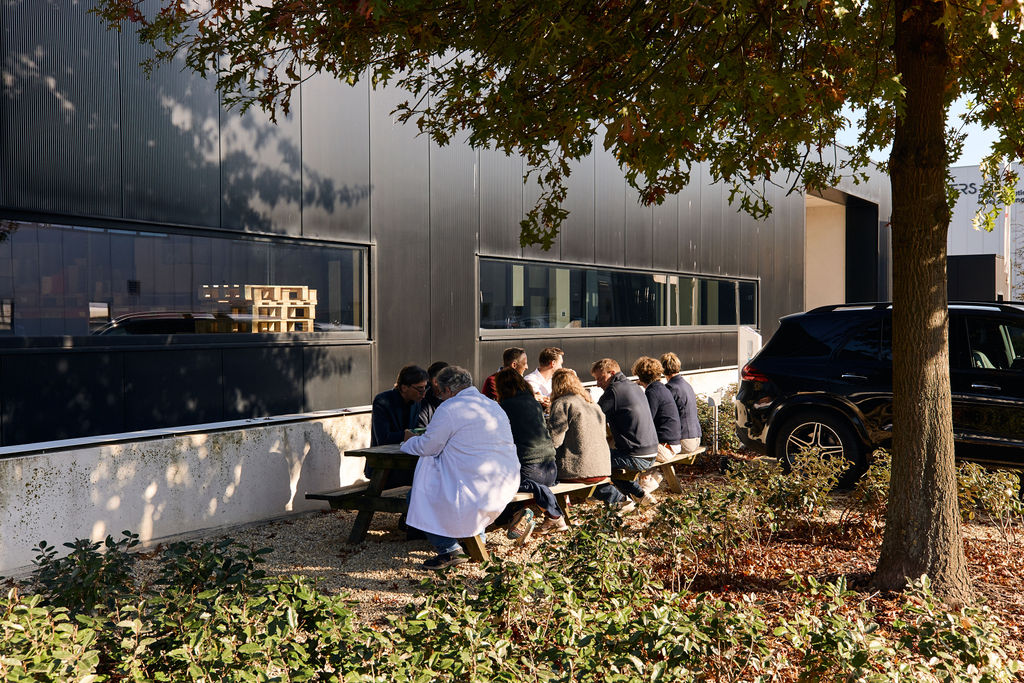
- •Work-life balance & family support: Flexible shift patterns, part-time opportunities, and on-site childcare facilities (e.g., De Kleine Prins at the Boechout campus) help employees balance family and work responsibilities.
- •Health and safety culture: Regular safety briefings, incident tracking, and certified management systems strengthen occupational well-being.
- •Social dialogue & freedom of association: Reynders label printing is a signatory to the ETI Base Code, guaranteeing the right to union representation and collective bargaining. Employee councils and QA meetings ensure transparent communication and participatory decision-making.
- •Equal treatment & inclusion: The company enforces a strict Code of Conduct prohibiting discrimination, harassment, and inequality, ensuring equal pay for men and women in equivalent roles.
C6: Human Rights Policies and Processes
Code of Conduct
Reynders label printing has implemented internal rules through its Code of Conduct, which applies to all employees across its sites. The Code covers:
- •Respect for human rights and dignity
- •Equal treatment, diversity, and zero tolerance of discrimination or harassment
- •Safe and healthy working conditions
- •Fair remuneration and compliance with labour laws
- •Freedom of opinion and open communication
- •Compliance with applicable laws and internal company rules
Policy Confirmations
Human Rights Incidents in Value Chain
There were no serious human rights incidents reported involving workers in the value chain during the reporting period.
Worker Engagement and Representation
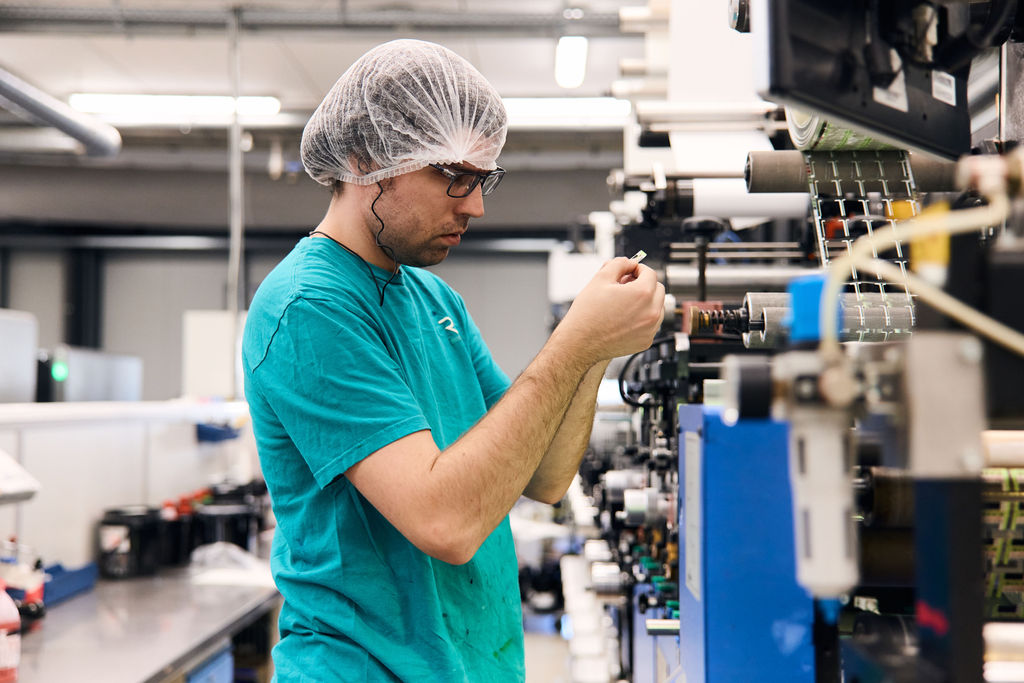
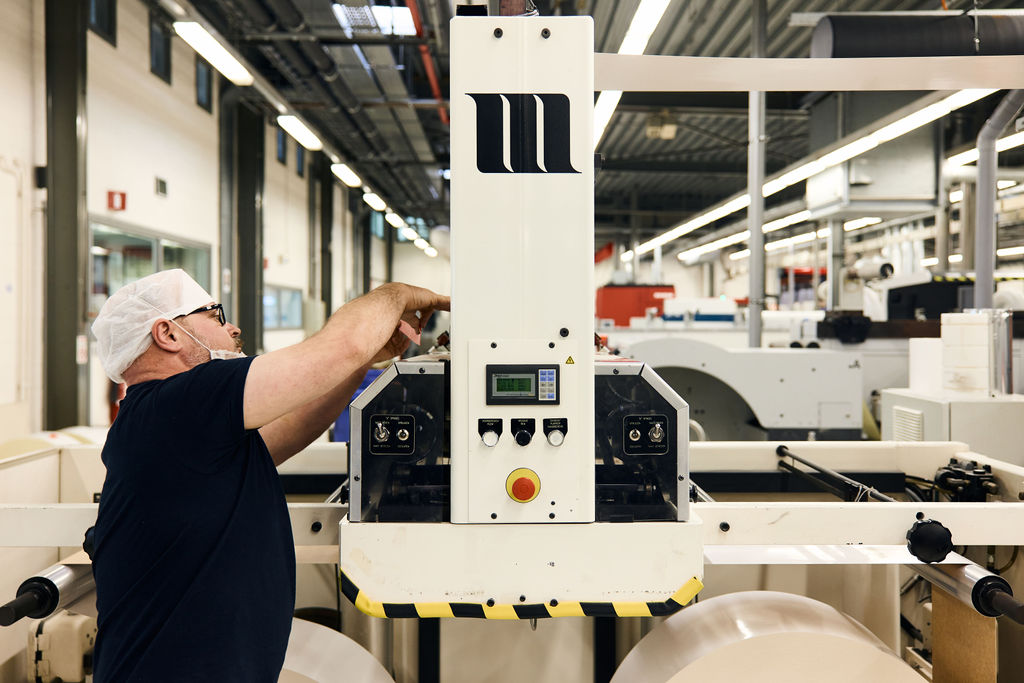
The perspectives of Reynders label printing's own workforce are taken into account in decisions or activities aimed at managing the actual and potential impacts that influence them. Employee engagement occurs through direct communication with own workforce and regular consultations with workers' representatives.
Engagement Stages and Frequency
Employee engagement occurs at several stages:
- •Operational stage: Daily and bi-weekly meetings address production and safety issues
- •Strategic and policy stage: Regular reviews of working conditions, wages, and safety under ISO 9001 and ISO 45001 frameworks
- •Annual stage: Salary benchmarking and HR reviews
Type of engagement: two-way communication, employee feedback sessions, and consultation through workers' councils and union bodies.
Integration of Workforce Perspectives
Input from employees and their representatives is used to identify workplace improvements (health, safety, ergonomics), review working-time organisation, and adjust training and development opportunities. Feedback is integrated through HR management and site leadership teams.

Grievance and Remediation Processes
Channels for Raising Concerns
Reynders label printing has established channels for raising concerns and needs and supports their availability in the workplace for its own workforce. The company has not identified any significant negative impact that it has caused or contributed to affecting persons within its own workforce.
Reynders label printing provides multiple formal and informal channels that allow employees to raise concerns or express needs directly to management:
- •Direct communication during daily briefings, QA meetings, and production meetings
- •HR and line management – employees can approach supervisors or HR staff at any time
- •Works councils and union representatives at European sites, which facilitate structured dialogue
- •Internal email and in-person meetings used to report issues or request support
These channels are established directly by the enterprise, and the company has a grievance/complaints handling mechanism related to employee matters.
B8: Workforce General Characteristics
Total Employees by Gender
| Gender | Headcount |
|---|---|
| Male | 447 |
| Female | 245 |
| Total | 692 |
Employee Turnover
Employees who left during reporting period
Employee turnover rate
Employees by Country
| Country | Headcount |
|---|---|
| Belgium (BE) | 387 |
| Poland (PL) | 92 |
| Germany (DE) | 80 |
| Spain (ES) | 46 |
| France (FR) | 42 |
| India (IN) | 28 |
| Other countries | 17 |
Employees by Gender, Contract Type, and Employment Type
| Gender | Contract Type | Employment Type | Number |
|---|---|---|---|
| Male | Permanent | Full time | 437 |
| Male | Permanent | Part time | 10 |
| Female | Permanent | Full time | 222 |
| Female | Permanent | Part time | 23 |
Methodology
Data related to Reynders label printing's own workforce (including headcount, employment type, gender distribution, training hours, and health & safety indicators) were collected at the level of each subsidiary within the Reynders label printing and subsequently consolidated at the Group level for reporting purposes. Each production site maintains its own HR records and payroll systems, which serve as the primary data source. The consolidation process was coordinated by the Group HR and Sustainability departments, ensuring consistency across countries and business units.
C5: Temporary and Agency Workers
Reynders label printing has people in its workforce who are not employees. These are primarily agency workers at Reynders Etiketten Deutschland.
Total non-employees in own workforce
Self-employed people
Agency employees
Methodology
Non-employee workers are reported in headcount and tracked through the time recording system (ATOSS) at Reynders Etiketten Deutschland. The number of agency workers is not included in the total employee count but is tracked separately.
B10: Collective Bargaining Coverage
Employees covered by collective bargaining agreements
Percentage of total employees covered
C5: Management Gender Diversity
Gender Representation in Top Management
| Gender | Number | Percentage |
|---|---|---|
| Male | 22 | 92% |
| Female | 2 | 8% |
Top management is defined as one and two levels below the administrative and supervisory bodies.
Distribution by Age Group
| Age Group | Number | Percentage |
|---|---|---|
| Under 30 years | 112 | 16% |
| 30-50 years | 340 | 49% |
| Over 50 years | 240 | 35% |
B10: Remuneration and Adequate Wages
Confirmation of Adequate Wages
All employees across all Reynders entities are paid adequate wages, in line with applicable benchmarks:
B10: Training and Skills Development
Performance and Career Development Reviews by Gender
| Gender | Number Participated | Percentage |
|---|---|---|
| Male | 227 | 51% |
| Female | 98 | 40% |
Average Training Hours by Gender
| Gender | Total Training Hours | Average per Employee |
|---|---|---|
| Male | 9,106.25 | 20 |
| Female | 3,445.00 | 14 |
B9: Workforce Health and Safety
Fatalities
| Type of Workers | Result of Fatalities | Number |
|---|---|---|
| Employee workers | Fatalities as a result of work-related injuries | 0 |
| Employee workers | Fatalities as a result of work-related ill health | 0 |
Number of recordable work-related accidents
Rate of recordable work-related accidents
Cases of recordable work-related ill health
Total number of lost workdays due to work-related injuries, illnesses, and fatalities
B10: Gender Pay Gap
Gender Pay Gap
Difference of average pay levels between female and male employees
Note: First time gathering this data. Next year, we will examine the numbers in detail as we do not yet account for parity differences across countries.
Remuneration ratio between the highest paid employee and the median
Ratio between remuneration of highest paid employee and the median
C7: Human Rights Incidents and Complaints
Number of incidents of discrimination
Total complaints made through workforce channels
Complaints filed to National Contact Points for OECD
Serious Human Rights Incidents
There have been no cases of serious human rights incidents (e.g., forced labour, trafficking or child labour) involving own staff during the reporting period.
CSR and Community Engagement
Reynders label printing integrates social responsibility into its operations through long-term community, cultural, and educational initiatives across its global sites.
Community projects and charitable support
- •Educational support in India – Project "Bhagiya": Reynders label printing finances the rent and operation of two basement schools in Rajasthan, covering the salaries of four full-time teachers. These schools provide education for underprivileged children who would otherwise follow their parents to work.
- •Cultural regeneration in Belgium – "Boechout Forwards": The company co-developed a cultural and social meeting center on the site of the former "California" soup factory, in partnership with the Municipality of Boechout and local private actors. The center now hosts community events, theater, and educational activities.
- •Recreation and biodiversity – "Play and Recreation Forest": Since 2009, Reynders label printing has maintained a 4.1-hectare forest in Boechout, which is open to youth organizations and local associations. More than 5,000 trees and 2,900 shrubs have been planted. The site includes the restored 17th-century Courtois Chapel and hosts the annual "Nature Run" and family events for employees.
- •Inclusive procurement: Reynders label printing deliberately selects local suppliers that employ or integrate people with disabilities, psychiatric patients, or refugees.
- •Daycare center for employees: Since 2005, part of the Boechout logistics building hosts the daycare "De Kleine Prins", which provides preschool care for twelve children of Reynders label printing employees.
Educational and training initiatives
- •Reynders label printing cooperates with the Belgian Packaging Institute (BVI), providing expertise for professional training courses in packaging and labeling.
- •Through industry associations such as FINAT, UNFEA, and ECPA, Reynders label printing participates in workshops and training programs related to lean management, waste reduction, and sustainability.
- •From 2024, Reynders label printing guarantees at least five training days per employee annually, emphasizing on-the-job learning and safety education.
Environmental and volunteering-related actions
- •Employees and local residents participate in the maintenance of the Play Forest and biodiversity initiatives (e.g., insect hotel and local reforestation).
- •The company regularly sponsors and organizes community sport and nature events to raise awareness about sustainability and conservation.
We Follow Ethical Principles
In our daily work, we follow ethical and moral principles, and we expect all our employees and collaborators to adhere to them as well.
Business Conduct Policies
Key contents of policy
The Code of Conduct includes commitments to:
- •Conducting all business operations with honesty, transparency, and fairness.
- •Prohibiting bribery, corruption, and conflicts of interest.
- •Ensuring equal opportunity, non-discrimination, and respectful workplace behaviour (details already covered under S1-1).
- •Upholding data confidentiality, intellectual property rights, and responsible communication with customers and partners.
- •Promoting safety, quality, and environmental stewardship as part of daily business ethics.
Anti-corruption and anti-bribery policies
Reynders label printing has policies on anti-corruption or anti-bribery consistent with the United Nations Convention against Corruption.
Training on business conduct
Training on business ethics and Code of Conduct awareness is included in onboarding programs and periodic internal briefings. It targets all employees, particularly management and those in roles involving supplier relations, procurement, and customer communication. Frequency and scope vary by site but are aligned with ISO and ETI audit requirements.
Functions most at risk
Functions identified as most exposed to corruption or bribery risks include:
- •Procurement and supplier relations, due to supplier selection and negotiation processes.
- •Sales and business development, especially in international contexts involving contract bidding.
- •Finance and administration, responsible for approving payments and monitoring compliance.
All these functions are governed by anti-bribery clauses in the Code of Conduct and reinforced through ETI Base Code adherence.
B11: Convictions and Fines for Corruption and Bribery
Total number of convictions for corruption and bribery
Total amount of fines incurred (EUR)
Reynders label printing has not incurred any convictions or fines for violation of anti-corruption and anti-bribery laws during the reporting period. The company maintains strict compliance with all applicable anti-corruption legislation.
C8: Revenues from Certain Sectors
Reynders label printing does not operate in the fossil fuel sector (coal, oil and gas), chemical production, or cultivation and production of tobacco. The company's business activities are focused exclusively on label and shrink sleeve printing for the food, beverage, cosmetics, and pharmaceutical industries.
Revenue from controversial weapons
Revenue from cultivation and production of tobacco
Conclusion
Thank you for reading our first consolidated sustainability report.
This report presents a transparent view of our ESG activities and our commitments to all stakeholders. We are aware that the path to sustainability is a long-term process that requires constant effort and improvement.
We believe that our steps in environmental responsibility, social responsibility, and proper corporate governance contribute not only to our business success, but also to a better future for everyone.
Together we create a sustainable future.
Reynders label printing
Sustainability Report 2024
Contact:
www.reynders.com
VSME Data Point Index
This index provides a comprehensive mapping of all Voluntary SME Sustainability Reporting Standards (VSME) datapoints disclosed in this report.
VSME Standard Compliance
This report follows the Voluntary SME Sustainability Reporting Standard (VSME). The data points below use exact VSME codes from the Basic Module (B1-B11) and Comprehensive Module (C1-C9).
| VSME Code | Data Point | Description | Section |
|---|---|---|---|
| B1 | reportingPeriodStarts | Reporting period start date | B1 |
| B1 | reportingPeriodEnds | Reporting period end date | B1 |
| B1 | b1-24-a | Basic or comprehensive module disclosure | B1 |
| B1 | b1-24-b | Omitted disclosures due to sensitivity | B1 |
| B1 | b1-24-c | Consolidated or individual sustainability report | B1 |
| B1 | b1-24-d | List of subsidiaries with addresses | B1 |
| B1 | b1-24-e | Basic information about the company | B1 |
| B1 | b1-24-e-iii | Size of the balance sheet (in Euro) | B1 |
| B1 | b1-24-e-iv | Turnover (in Euro) | B1 |
| B1 | b1-24-e-vi | Country of primary operations | B1 |
| B1 | b1-24-e-vii | Geographical location of branches, sites or facilities | B1 |
| B1 | b1-25 | Sustainability-related certifications or labels | B1 |
| C1 | c1-47-a | Significant groups of products and/or services offered | C1 |
| C1 | c1-47-b | Significant markets the undertaking operates in | C1 |
| C1 | c1-47-c | Main business relationships | C1 |
| C1 | c1-47-d-1 | Strategy elements relating to sustainability issues | C1 |
| C1 | c1-47-d | Elements of the strategy affecting sustainability issues | C1 |
| B2 | b2-26-a-b-c | Practices, policies and/or initiatives for sustainable economy | B2 |
| B2 | b2-26-b | Publicly available policies for transition | B2 |
| B2 | b2-26-d | Target related to policy for sustainable transition | B2 |
| B2 | b2-26-1 | Sustainability issues addressed through practices/policies | B2 |
| B2 | c2-48-49 | Practices, policies or initiatives for each sustainability issue | B2 |
| B3 | b3-29 | Total energy consumption | B3 |
| B3 | b3-30-a | Gross GHG Emissions Scope 1 (tCO2e) | B3 |
| B3 | b3-30-b | Gross GHG Emissions Scope 2 - location based (tCO2e) | B3 |
| B3 | b3-109 | Gross GHG Emissions Scope 2 - market based (tCO2e) | B3 |
| B3 | b3-50 | Gross GHG Emissions Scope 3 (tCO2e) | B3 |
| B3 | b3-51 | Gross Scope 3 by categories (GHG Protocol) | B3 |
| B3 | b3-31-a | Emission intensity - Scope 1 | B3 |
| B3 | b3-31-b | Emission intensity - Scope 2 (location-based) | B3 |
| B3 | b3-31-b-i | Emission intensity - Scope 2 (market-based) | B3 |
| C3 | c3-55 | Plan to reduce impact of climate change | C3 |
| C3 | c3-56 | Operates in high climate impact sector | C3 |
| C3 | c3-54 | Targets for reducing greenhouse gas emissions | C3 |
| C3 | c3-54-e | Main actions to achieve emissions reduction targets | C3 |
| C3 | c3-55-1 | Description of climate change reduction plan | C3 |
| C4 | c4-57 | Identified climate-related hazards and transition events | C4 |
| C4 | c4-57-a | Description of climate-related hazards and transition events | C4 |
| C4 | c4-57-b | Assessment of exposure and sensitivity to climate hazards | C4 |
| C4 | c4-57-c | Time horizons of climate-related hazards | C4 |
| C4 | c4-57-d | Climate change adaptation measures taken | C4 |
| C4 | c4-58 | Potential adverse effects of climate-related risks | C4 |
| B4 | b4-32-1 | Required to report emissions of pollutants | B4 |
| B4 | b4-32-2 | Emissions information publicly available | B4 |
| B4 | b4-32-3 | URL where emissions information is publicly available | B4 |
| B4 | b4-32-4 | Types and quantities of emissions of pollutants | B4 |
| B5 | b5-33-1 | Sites in or near biodiversity sensitive areas | B5 |
| B5 | b5-33-2 | Areas with endangered biodiversity | B5 |
| B5 | b5-34 | Information on land use | B5 |
| B6 | b6-35 | Amount of water withdrawn by location | B6 |
| B6 | b6-36 | Significant water consumption in production processes | B6 |
| B6 | b6-36-1 | Amount of water consumed by location | B6 |
| B7 | b7-37 | Application of circular economy principles | B7 |
| B7 | b7-37-1 | Description of circular economy principles application | B7 |
| B7 | b7-38-c | Operates in sector using significant material flows | B7 |
| B7 | b7-38-c-1 | Annual material flows of relevant materials used | B7 |
| B7 | b7-38-a-b | Generated waste by type and treatment method | B7 |
| B8 | b8-39-a | Number of employees by contract type | B8 |
| B8 | b8-39-b | Number of employees by country and gender | B8 |
| B8 | b8-40 | Employs more than 50 employees | B8 |
| B8 | b8-183 | Number of employees who ended employment | B8 |
| B8 | b8-40-1 | Employee turnover | B8 |
| C5 | c5-59-1 | Number of women in top management | C5 |
| C5 | c5-59-2 | Number of men in top management | C5 |
| C5 | c5-59 | Management's gender diversity ratio | C5 |
| C5 | c5-60-1 | Total number of self-employed persons | C5 |
| C5 | c5-60 | Total number of temporary workers (agency workers) | C5 |
| B9 | b9-41-a | Total number of recordable work-related accidents | B9 |
| B9 | b9-185 | Number of hours worked by own workforce | B9 |
| B9 | b9-41-a-1 | Rate of recordable work-related accidents | B9 |
| B9 | b9-41-b | Number of fatalities due to work-related issues | B9 |
| B10 | b10-42-a | Employees receive adequate minimum wage | B10 |
| B10 | b10-195 | Average gross hourly pay level of male employees | B10 |
| B10 | b10-195-1 | Average gross hourly pay level of female employees | B10 |
| B10 | b10-42-b | Gender pay gap | B10 |
| B10 | b10-42-c | Percentage of employees covered by collective bargaining | B10 |
| B10 | b10-42-d | Average number of training hours per employee by gender | B10 |
| C6 | c6-61-a | Code of conduct or human rights policy for own workforce | C6 |
| C6 | c6-61-b-i | Policy covers child labour | C6 |
| C6 | c6-61-b-ii | Policy covers forced labour | C6 |
| C6 | c6-61-b-iii | Policy covers human trafficking | C6 |
| C6 | c6-61-b-iv | Policy covers discrimination | C6 |
| C6 | c6-61-b-v | Policy covers accident prevention | C6 |
| C6 | c6-61-c | Complaints-handling mechanism for own workforce | C6 |
| C7 | c7-62-a-i | Confirmed incidents of child labour | C7 |
| C7 | c7-62-a-ii | Confirmed incidents of forced labour | C7 |
| C7 | c7-62-a-iii | Confirmed incidents of human trafficking | C7 |
| C7 | c7-62-a-iv | Confirmed incidents of discrimination | C7 |
| C7 | c7-62-b | Actions taken to address incidents | C7 |
| C7 | c7-62-c | Incidents involving value chain workers | C7 |
| B11 | b11-43 | Incurred convictions and fines in reporting period | B11 |
| B11 | b11-43-1 | Total number of convictions for corruption and bribery | B11 |
| B11 | b11-43-2 | Total amount of fines incurred | B11 |
| C8 | c8-63-c | Business operates in fossil fuel sector | C8 |
| C8 | c8-63-d | Business is active in chemicals production | C8 |
| C8 | c8-63-a | Revenue from controversial weapons | C8 |
| C8 | c8-63-b | Revenue from cultivation and production of tobacco | C8 |
| C9 | c9-242 | Governance body in place | C9 |
| C9 | c9-243 | Number of women in the governance body | C9 |
| C9 | c9-243-1 | Number of men in the governance body | C9 |
| C9 | c9-65-1 | Gender diversity ratio in the governance body | C9 |
People at the Heart of Our Business
We prioritize fair treatment, safe working conditions, and respect for human rights throughout our workforce and value chain.